Thursday, October 11, 2012

Star Trek: Quicksilver

Gul (General) Dukat of the Cardassian military
ruled the station where Faine Channing landed
when she was taken from Earth by the
terrorist's weapon.
Photo: Memory Alpha
A little about the Quicksilver script I'm working on (with others): for those unfamiliar with some of the Star Trek references, I have linked to wikis to fill you in. If something doesn't ring a bell, click on it.

Not long after the Dominion War, there’s a Changeling hiding on Earth, and Captain Nado has assembled the quadrant’s foremost experts to catch him. But he isn’t a Changeling at all; he’s a Suliban Cabalist and he doesn’t belong there. (He's from 200 years in the past, for one thing.) Neither does the human from 21st-Century Earth who just appeared one day on a Cardassian space station. Investigation uncovers a terrorist behind it all, and he’s blowing up whole cities at a time. The terrorist himself eludes the team for now, but they are able to locate and destroy his weapon – only to learn that what they destroyed was just a decoy. Captain Nado visits the Justice Minister on the planet where the terrorist is hiding, to ask for his arrest and extradition, but returns empty-handed. Here's what she tells her team:


CAPTAIN NADO (half-Bajoran)
I learned something about who we're dealing with on that planet. Their procedure for apprehending suspects is simply not something the Federation could have anything to do with. They cordon off a ring around the suspect and arrest everyone who happens to be within it, whether they have anything to do with the case or not, and subject them to the most horrible cruelties. I've seen victims of this barbaric practice, talked with them. Some were missing fingers. One woman had her lips cut off . . .

SINIJ (Suliban Cabalist)
So we have to kidnap him?

COMMANDER MACLOMOND (Human)
Apprehension of criminals in non-Federation space without the consent of the local authorities: not only is it illegal, but I can't think of a more surefire way to start a war with about six different species and coalitions at once.

GILLEK (Cardassian military) nods in agreement.

NADO
Options?

TEJAT (Cardassian former spy)
Captain, I believe you're faced with the kind of decision we Cardassians have been forced to make often. Do you participate in the torture of innocent civilians, or stand by and watch while our friend destroys the entire quadrant, one city at a time?


Wednesday, October 10, 2012

Catching Up

It's been forever since I've said a thing to you. I won't bore you with all that's happened. Here's what I'm doing now:

  • Tweaking Quicksilver, a Star Trek script. Yes, I said Star Trek. I wrote it with two other people, tailored to a particular actress, who had expressed interest in some public remarks. She declined it, so now we're revising it to be suitable for lots of actresses, before we send it off to Paramount.
  • Plugging away at Pyte. The plot is good, the outline is good, but it reads like 57,000 words of drivel. I wrote it too fast, as an experiment. I kept reading that editing as you write is a bad habit: just write, and refine it later. Apparently that advice is not for me. I'm rewriting it, but it's slow going.
  • Getting ready for NaNoWriMo. I'm excited! Still deciding which novel to write:
    • 1. The Suitcase Man. Gretchen is on a road trip, heading back home after a frantic drive to see her father when he had a heart attack. Dad's okay, but now Gretchen has locked her keys in the car. She's broke and far from anyone she knows. That's when she meets Jeremiah, who's offering to pay her $5000 to deliver a suitcase. The reason I hesitate: It's the third book in the series that starts with Pyte. Not sure if I'm not going to write myself into a corner if I don't do them in order.
    • 2. An Analysis of the Cardassian Language. Faine Channing is visiting her cousin in Chicago when she suddenly finds herself on an alien space station 350 years in the future. Too bad the aliens, in that century, are at war with Earth. She's interrogated and kept as a prisoner for years until the war is over. This book is her journal. The reason I hesitate: It's Star Trek. Which means if I don't sell it to Pocket Books, I don't sell it at all.
Which one would you write?

Tuesday, March 27, 2012

Guest Post: On an Economy of Words

Please help me welcome our first guest blogger, Dan Moore:


It's time for my ugly little confession. I have held a novel in my hand and nestled back on my couch. I have buried my nose in its pages and surrendered to the author's fantasy. And, I have skipped over entire paragraphs of description out of sheer boredom. Honest. I've done it.
Striking the balance between description and advancing the plot of a story is an important discipline. I know that there are readers out there who just love endless descriptions. They swoon over wordy sentences with convoluted grammatical structure. I am not one of those folks.
I was taught to write for television and radio. In radio, every word counts. In television, you don't need every word. Although writing books does not bear the constraints of broadcast writing, there is wisdom to be found in its economy. Words are like water. Offered to the reader in well-crafted moderation, they are fine drink for the mind. If poured out in excess, the experience can be like water-boarding.
There are writers who can thrill their readers with verbosity, but many of us don't have the talent, or wit, to do it well. That is okay, because employing fewer words doesn't doom us to literary oblivion. One does not have to sacrifice elegance or power when choosing to be brief. Ernest Hemingway is credited with writing a six-word-story. It reads as follows. "Baby shoes, for sale, never worn." A few well-chosen words can be woven into uncommon prose.
Think of writing as a form of hospitality. When you write a story, you are creating a place for your readers to come and visit. You are the host, the storyteller. A good host doesn't bury his or her guests under everything that can be pulled from the closets and attic. The host gives the visitor space to linger and appreciate the environment. Economical writing is the act of being efficient and evocative. It creates space. It is not obsessed with saying everything that comes to mind. It allows the reader to fill the pregnant voids. Compact prose gives them an amazing gift. It gives their imaginations room to embrace your masterpiece.
In some cases, wordy writing suggests that the writer does not want to relinquish control. If everything is overstated, then the purity of the narrative will be protected. I see the reader as a partner in my storytelling. Writing is only half of the relationship. The reader completes the storytelling. Our narrative will always be shaped by the minds of our readers. Our story is impotent if it isn't. Great writing is always a catalyst for the reader's imagination. Catalysts begin the process; they do not subsume it.
Sometimes writers get wordy when they lose focus. Each scene we write has a purpose. Each paragraph plays a part in furthering the scene. Each sentence has a reason. Individual words matter. Staying focused gives us a metric to evaluate each word and sentence. It teaches us what is important and what is not. What does the reader need to know in order to move forward through the world I have created? Do I really need to describe every detail? Once a sentence has accomplished its task, there needs to be a period.
Wordiness threatens the pacing of a narrative. It weighs it down with an unnecessary burden. Every story has rhythm. Good writing is poetic. It breathes. Some scenes move quickly. Others meander, but the plot always moves forward. Economical writing imparts energy. It evokes movement and sustains the reader's interest. If storytelling is a dance, it is much easier to teach a gazelle than a hippopotamus.
Moore later...

Dan Moore lives with his wife Diana near Syracuse, New York. He is a freelance video producer and the proud father of two sons, two daughters-in-law and three grandsons. Dan caught the Science Fiction bug by reading Robert Heinlein’s “Spaceman Jones” when he was in high school. He holds degrees in Electrical Engineering, Theology and Broadcast Production and Writing. He has written three science fiction novels: Meridian's Shadow, The Rings of Alathea and Nixie's Rise.


Friday, March 23, 2012

Screenplay Adaptation: "The Suitcase Man"

On February 29th, I said that my daughter, my niece and I were considering taking a short script and making a movie out of it for YouTube. I said that I'd keep you posted along the way, and mentioned that I'd already written the script. Here's a little bit more about that process:

I started by looking through the short stories I've written. I wanted one that:
  • Had a very visual story.
  • Could be filmed inexpensively (no exotic locations or special effects).
  • Had a variety of characters to help demonstrate the talents of my girls.
  • I hadn't sold the copyright to.

    And of course I ended up choosing "The Suitcase Man".

    I copied and pasted it into my scriptwriting program, Celtx, and broke it out into action, characters, parentheticals and dialog. Then I looked it over carefully and made a few changes for the sake of actors and locations. For example, I made the character Gretchen younger because my daughter will be 13 when we expect to film this. Finally, I adjusted some of the action and dialog to show onscreen some things that I had explained in the short story format.

    In the next "Suitcase Man" installment: how we chose our roles.

Wednesday, March 21, 2012

Free Online Writing Instruction: Scripts

I recently came across Buzz McLaughlin's blog, and I thought you should know about it.

Buzz is an active feature film producer and partner in the independent production company Either/Or Films. He's the author of many plays and screenplays and of the best-selling book The Playwright’s Process. A Ph.D in dramatic literature, he taught scriptwriting as Playwright-In-Residence for many years at Drew University and currently runs a script consulting service. And he happens to live not far from me (quite close, actually, but I'd have to borrow my brother's canoe).

His blog is called Buzz McLaughlin on Scriptwriting. Some of the post titles:
  • "Developing a Script That’s 'Ready”: What It Takes"
  • "Locations and Your Script"
  • "The Myth of Recognition"
  • "The Risk of Self-Exposure"
The latest is called "Leisure Time" and it's Part 7 of a series entitled "Developing Great Characters".

I've just begun reading the posts (there are a lot of them in the archives) and so far I've found lots of good information clearly written in a friendly style. I'm looking forward to learning more. I would like to add just one more piece of advice from my own experience, though: no matter how 'into' the writing you are, don't forget to eat.

Monday, March 12, 2012

Terrorism in New Hampshire

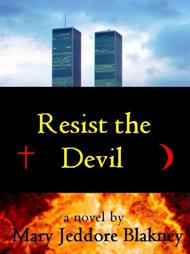
My current primary 'real work' project is adapting Resist the Devil into a screenplay. It will be a full-length action movie about what happens to three New Hampshire residents when their town suffers a terrorist attack.

I know this is short but I don't want to spill too much this early. Watch here for more later.

Friday, March 9, 2012

Three Girls and a Suitcase Man

Last time, I told you I was looking into making a short film for Youtube with two other people. I'd like to introduce them to you:

Heather O'Hourigan has the amazing ability to recount scenes from movies or television, word for word and move for move. While that in itself may not be a useful skill, she makes it useful by combining it with a dose of logic and a formidable acting and writing talent. How this applies: she's the stickler who says, "I don't think that character would say, 'It's not'. She'd say, 'It isn't'." We shake our heads sometimes, but we do appreciate it. Heather's credits include Ms. Potter in "It's a Wonderful Life" and Trudy in "The Search for Signs of Intelligent Life in the Universe".

Gannopy Blakney-Urena has a great ear for flow and clarity, credibility and relevance. As an actress, she brings grace and sensibility to her characters. Her first movie (still untitled) is in post-production.

I don' t know how I managed to be so spoiled, but I'm blessed with a very talented family: Heather is my niece and Gannopy is my daughter. Yes, I'm very proud.

This project won't be done soon. For one thing, it's probably never going to be the top-priority project for any of us. School and marketable work come first. For another, Heather's the only one with any experience at all with Youtube beyond just viewing. And it goes on from there. This is going to an educational exercise, an exploration, and, just possibly, one day, a short film.

Oh, and it'll also be a lot of fun, and we want to take the time to make sure it stays that way.

I'll let you know how it goes.