Showing posts with label editing. Show all posts

Sunday, August 4, 2013

Status Update

Here's what I've been up to lately:

Resist the Devil: With the help of some very talented relatives (yeah, I'm that lucky) I sent the novel through another proofread and updated the cover, then expanded its distribution to all the ereader stores (Nook, iBooks, etc.) and made it available in print as well.

Editing: I continue editing nonfiction articles, mostly web content, but I'm also proofreading a novel. I think that must be the ultimate literary nerd test: I love proofreading novels! I think it's because I tend to proofread when I read, anyway, and the mistakes irritate me if I can't do anything about them.

The Claw and the Eye: After the recent work on Resist, I decided my book of short stories could use the spa treatment, too. At this point it's a matter of looking it over and deciding what needs to be done.

An Analysis of the Cardassian Language: I'm still writing the second draft, slowly. I love this book - love the characters, love the feel of the story, love to write it. And I think, in some illogical way, that makes me feel like I have to get everything else done first, before I can work on it. No dessert until your plate is clean. So I've been naughty and not been writing consistently.

Friday, July 26, 2013

Editing Services

I'm officially hanging out my shingle as an editor. If you want to tell your friends, I'd be grateful. I've been doing editing for several years now and just haven't advertised. Now I'm making it more official. The details:

I provide affordable line editing, proofreading and ebook formatting services for novels, short stories and similar creative works. Indie authors and clients from any country are welcome.

Types of Editing
A novel should go through at least three different types of editing, and they should be done by at least three different people. It needs content editing to help you organize your story in the most interesting and understandable way and catch any passages or plot elements that are confusing, redundant or boring. After that it needs line editing to polish the grammar, spelling, punctuation and so forth. And just when it seems like the book must be perfect, it needs proofreading to catch the errors that somehow stayed in there anyway. A good professional standard for proofreading is to keep checking until you have carefully read through the whole book once without finding a single error.

Formatting
Formatting of ebooks is a related service, as it requires a lot of accuracy and attention to detail. It's quite different from print formatting because all layout elements such as page breaks, justification and even tabs and hidden field codes must be removed. In addition, there are certain normally harmless elements (15-point font in a subheading, for example) that should be removed because one or more of the ereader platforms has trouble handling them.

Services 
  • Line Editing
    • Requirements: The final draft must already be written and the content editing done. Attempts at line editing of earlier drafts will only waste your money and my time, so please be sure the story is ready. If you're not sure, feel free to contact me. I love talking with other writers, anyway, and would be glad to help you figure out if your work is ready for line editing. I'm sorry that I cannot line edit any piece I have beta read. Fresh eyes are mandatory for a professional job.
    • Pricing: $0.25 per 100 words, $5.00 minimum
  • Proofreading
    • Requirements: Line editing must be completed, and the work must be new to me.
    • Pricing: $0.10 per 100 words, $5.00 minimum
  • Ebook Formatting for Smashwords Premium Distribution
    • Requirements: Please be sure your manuscript is finished and polished. I'll format pretty much anything to fit the requirements of the Smashwords style guide, but you'll want to make sure the writing and editing are done first. If the piece is not edited according to Smashwords minimum standards, I'll let you know.
    • Pricing: $0.05 per 100 words, $10.00 minimum
To order services or ask questions, please use the contact form on the left. I look forward to working with you.


Friday, July 12, 2013

10 Ways to Improve Your Writing

Today's post is by Derek Haines:


As social networking is predominately text driven, it really is a good idea to make sure your writing is up to an acceptable and readable standard. There’s nothing worse than reading a tweet, Google+ or Facebook entry or blog post that is full of errors. It really gives an impression to the reader that you are a either careless, or worse, a bit of a dope. So to help you make a better impression on the few million people that may be reading you, (yes, daunting isn’t it?) here are a few tips you might want to consider.
1. Always check that your verb agree with the subject. I hates this mistake with a a passion.
2. Almost every comptupter has a speelchekker, so use it. Yoo could even use teh auto-tect correction for commun errors.
3. Typos involving small common words like that and than, it  and is and there and their are easy to make. Check before you hit the send button. Better to be safe that sorry.
4. One mistake that irks me is the incorrect use of capitalisation. I just cringe when i see this error.
4. When you use numbered bullets, make sure they are correctly sequential.
6. Check your formatting in blog posts as errors are not always obvious.
7. USE OF SHOUTING CAPITALS WILL OFFEND READERS, SO DON’T USE THEM. Except for unavoidable acronyms. LOL
8. There are some who think; oddly enough, that punctuation – commas, colons and em dashes, are a sign: or symbolic, of high intellect. In fact the opposite is true and you stand a good chance of looking like a real fool.
9. I dislike sentences that always start with I. I hate it in fact. I stop reading instantly. I would advise against it. I would.
10. Reading long passages of text on the Internet; whether it be on a computer, laptop or mobile phone is very tiring on a reader’s eyes so you should be careful not to ramble on with long sentences and un-paragraphed passages of text that are neither informative nor interesting as you will lose your reader very quickly as they will become bored and stop reading your diatribe quicker than you can say Jack Robinson, so don’t just keep typing ad infinitum about your pet subject in long and badly punctuated sentences that keep waffling on without ever coming to the point that was probably your intention to begin with but you forgot about once you got started and decided to add one extra point in your sentence that should have included a relative pronoun but you got lazy and just used a random comma and kept on typing. Phew!
11. Be sure that your title is relevant and an accurate summary of your article.
10 tips for better writing


Friday, June 28, 2013

Status Report on My Books

Many of you have asked how my current book is coming along, so I thought I'd give a quick report on all of them:

An Analysis of the Cardassian Language is in its second draft, and I've been posting the chapters as I complete them. However, I don't write sequentially and I don't want to give you the chapters out of order. I got the first 17 done and posted, then started at the end, and am working backwards. I plan on writing the whole 'back' third of the book before Chapter 18. But maybe I'll need a break soon and get 18 done a little earlier than planned. We'll see.

Neither The Claw and the Eye nor Resist the Devil got a chance to get any decent editing, etc. I'm growing more connections now, and I hope to at least make them somewhat better, soon. I'll feel a lot better about promoting them when I feel more confident that they are well-presented.

Friday, June 21, 2013

Bartholomew Cubbins

One of the most wonderful things about being a writer is that through my characters, I get to be all sorts of different people in all sorts of different places doing all sorts of different things. I get to wear 500 hats, each one more beautiful - or more exciting, or more thought-provoking - than the last. And even if, like Bartholomew Cubbins of the delightful old children's story, my characters are in danger of having their heads cut off by an outraged king, I get to experience all the excitement and none of the danger.


As an indie writer, I wear a lot of hats in another sense, too. I'm not only the writer, but the editor (which is impossible: you can't edit your own work), the designer, the marketing staff, the maid and so on. Even the act of writing these blog posts is a marketing task.

I like blogging, even if sometimes I resent it because it takes time away from the central task of my life: writing fiction. Some other jobs I wish I didn't have to do, and editing my own work is something that of course I can't do at all, to the necessary standards.

Fortunately, I don't have to wear all the hats myself. I can trade hats with other indie writers, making editing possible and some of the other jobs much less distasteful.

I know a lot of my readers are fellow indie writers, so how about it? Who wants to wash my dishes today?

Sunday, June 9, 2013

Suckers Guild

Late last fall, I got into a conversation on Twitter about how much better things would be for both writers and readers if there were an indie writers' guild. It started out very light-hearted - an offhand comment and a couple of joking responses - but very soon we realized we were onto something.

The Premise

The idea was that as much as we may want to, no one writer can ever produce a truly professional book all alone. It's not that we can't teach ourselves anything we would need to know. It's that no one of us could teach ourselves everything we would need to know, at the necessary level of expertise. And then there's the fact that you just can't edit your own work. To produce a truly professional book requires at least a few different pairs of eyes.

There are only three possible ways I can think of that an author can get a book out there, without compromising quality:

  1. Traditional publishing. I mean really traditional publishing, with the full editing and marketing force that goes with that. This option is like the lady's slipper I found this morning: we can't exactly pick that one, because it's an endangered species.
  2. Extremely expensive self-publishing. You pay for four, or at the very least, three expert editors, in addition to experts in layout, graphics, electronic formatting, printing, marketing and distribution. I've probably forgotten a job or two. Obviously, most writers simply don't have the money for this one.
  3. Collaboration. Like bees in a hive, each of us has a specialty, or develops one, and we all work together to publish and sell books we're not ashamed to put our names on.


The Plot

So that's the idea behind the Suckers Guild. We looked around and didn't see any writers' group already out there that worked like this, so we started one. To learn more, you can visit the Suckers Guild site.

The Title

I know you're wondering why we named it the Suckers Guild. It came from the half-joking remarks that began the whole conversation, about how we don't want our books to suck, about how our lack of access to publishing resources sucks, and even about PT Barnum's famous saying, that there's a sucker born every minute.

In the end, we chose it because it reminds us that while we strive against all the odds life throws at us, there's no need to be stuffy and take ourselves too seriously. Because -  yup, I'm going to say it - that would suck.

Friday, May 31, 2013

What Makes Editing Professional

I love it when I hear from readers.

Coming back to the blog and going through the comments left here, I was gratified to see how many are actually not spam. Apparently, people actually read what I put on here. That feels good.

I especially liked the comment Skye Warren left on the post "On Paid Services for Indie Authors" on April 1st, because Skye really took the time to join the conversation. Her comment was practically a post in itself. Certainly was a lot longer than my May 26 post. She said:

One of the problems is the narrow defintion of "editing" to mean proofreading, when in publishing-speak it actually refers to content editing and line editing. Can an average person with an English degree and sharp eye for typos become a proficient proofreader? Maybe so. But can they come close to a professional editor in term of story structure, character development, deep POV, voice? No, that's really a professional editor. Not saying someone couldn't move up that way, but it takes all the experience and knowledge of any fully professional endeavor. And the people who can do it well are not only making a full time living this way, they are booked for months (sometimes years) out. So can you get them to work on your manuscript on a barter system? No. You can't. So implying that indies can achieve anywhere near a quality level that publishers do (even smaller publishers) through barter is misleading.

Now I'm not a stickler for editing as much as some. I put my first two books out on more of a whim, and though they'd been read by upwards of 10 critique partners/beta readers, I didn't have them professionally edited. But as soon as they sold even a few copies and I decided to continue on as a self pub author (a publisher, really) I put 100% of their sales into editing. But even then it was copy editing, or basically, proofreading to fix any errors. Now I've finally been able to move into content editing, line editing, and proofreading. Thank goodness! Because I know these are quality "minimums" for a publisher, which is what a self publisher really is. By minimums, I'm saying that it will, of course, happen that we'll publish without them. Our first books, we're just seeing how things go. But if we want to be taken seriously as a self published author, these are things we must do. They're not optional, and the only way to get professional services is to pay for them.

Skye brings up a couple of very good points. The word 'editing' is, indeed, often misunderstood. To be publishable, a novel needs four types of editing. Pavarti K. Tyler does a great job of explaining the first three:

→ The Content Editor
This is the professional eye which looks over your manuscript with a fine tooth comb. They will catch things like inconsistent character behavior/speech, style issues, thematic variances and readability. A content editor will be able to help you adjust your language by audience (lit fic vs. YA – there is a difference!), make sure everything makes sense, has believable dialogue and a plausible plotline. Many people skip this step, thinking their editor who fixes commas will do this as well. If you are lucky, they will, although the cost for editors who are that skilled is quite high and often times, even if the individual is capable, their attention to other issues in your manuscript might mean they miss something that could make the difference between an ok story and an epic novel.
→ The Copy Editor
In journalism, a copy editor is essentially a fact checker and someone who protects the publication from libel. For our purposes a Copy Editor is more like a professional proof-reader. Someone who performs this task usually does minimal rewriting for the sake of efficiency of prose as opposed to stylistic choices. They check the manuscript for clarity and flow. In my experiences most copy editors will also do line editing as the two are tied closely together and work well as a two part process.
→ The Line Editor
... The line editor generally isn’t there to discuss story arc or make sure you understand how to use a dialogue tag. Instead, they are there to make sure you are putting out the best quality product possible. Line editors will go over each sentence to make sure it is ready for publication. They check for grammar, punctuation, spelling, consistency and word usage (Is he your Principle or your PrinciPAL?) and can often assist with rewriting/rewording sections that need help.

And the final type of editing your book will need is proofreading (and proofreading, and proofreading again, so many times it will drive you crazy). Sometimes this is considered part of the line editing job, and sometimes it's mentioned separately, but no matter how you talk about it, the task is the same. Proofreading starts when your book appears to be ready to print (or upload, as the case may be), in other words, when you think all the errors have been corrected and the book is error-free. It's the step of catching all those misspellings, missing commas and homonym-substitutions ('slough' for 'slue') that somehow got through anyway. And it's not done until that wonderful final pass when not a single error is found in the whole book.

The second great point that Skye brings up is that for reasons I think I shall never understand, some indie writers actually think it's okay to skimp on quality. Of course, that gives the rest of us a bad name, so just like those first groups of black students in 'white' schools in the 60's, we really have to shine if we're going to challenge the stereotype.

Skye's third great point is one she demonstrates rather than talks about, because she's a victim of it.  I do freelance editing for online ad copy, so maybe I see it more blatantly than a lot of people. But do a little research and you'll find it's a common practice for people who make a living by providing a particular service to try to convince gullible members of the public that they are indispensable.

A related misconception is the idea that all qualified editors want to edit full-time for a living, and none of them choose to write books, except maybe books about editing. Real life, of course, is much more diverse than that, which is why there are plenty of 'real' editors out there willing to trade their services for something they need and either can't or don't want to do. 

A fact we tend to overlook - maybe because it's so obvious - is that editing skill doesn't come from money, it comes from training. And the level of editing required for book publishing can only be gotten by a combination of high-quality training and personal dedication to the craft.

Sometimes it's tempting to take the easy way out and say that money is the answer. For the lucky few with enough money, it means writing a check or setting up a funds transfer and going on in the blind faith that the book is now publishable. For most writers it's a convenient excuse to skip the editing process, as it's too expensive anyway.

But we're novelists. Creativity and clever solutions are our specialty. So we really can't get away with using the money excuse. We just have to work together and make it happen.


Friday, January 11, 2013

Indie Writer Professionalism

One of my favorite times of the day is the hour I set aside for reading. The truism 'you can't write if you don't read' gives me the perfect excuse to lose myself in the magic of all those wonderful books on my Kindle shelf.

Theoretically. What really happens is usually more like this:

I climb the ladder into the loft just under the roof of my family's cabin. I arrange the pillows and, if it's chilly, throw a fluffy featherbed over my legs. I open the Kindle app on my netbook and select that indie book I'd downloaded, that I've been dying to get my teeth into. I convert the netbook to a tablet, lean back against the pillows and start to read.

And it's awful. So I go back to the bookshelf and pick out another book, and it's just as bad. I end up spending the whole hour looking for a book instead of reading one. Sometimes the beginning is boring and I plow through, telling myself to be patient and see if it gets better, but it doesn't. Sometimes the characters don't feel like people, or feel like six iterations of the same person. Sometimes the text rambles until I'm lost, or the sentences just don't make sense. Sometimes the meaning is clear but the narrative is so hiccuppy it takes work to trudge through a page.

Sound familiar? It probably wouldn't take many hours like that to make me swear off indie books and stick with the imprints, except that I believe in indie publishing: I think it's the future of the industry. And one of those indie books is mine. No wonder it's so hard to get readers to take me seriously. No wonder my friends look so surprised when they read my novel.

But my experiences with indie reading also force me to ask: how good is my own book? I'm not worried about the plot or the characters. I have confidence in my writing voice, and was lucky to have beta readers with experience, expertise and honesty. But the reviewers may have been comparing my novel to a batch of indies like the one I described above, beta readers aren't copy editors, and I'm a terrible proofreader of my own work because I tend see what I meant to type.

One solution I've seen proposed (often by free-lance editors, of course) is to hire an editor. That's a great idea, but first we have to figure out where the inventor parked his time machine (somewhere in the borough of Richmond, outside London, of course). I think most of us right now are lucky to have enough money to sleep indoors and keep our children clothed. But of course, after our professionally edited books go blockbuster, we'll have enough to hire editors. So we just have to run to the future ATM real quick, and we'll get right on it.

As Star Trek's Captain Picard used to say, "Options?"

Three of us indie writers were talking about this problem on Twitter, and decided to look into forming an indie writers' guild. A few of the potential benefits:

  • Pooling our strengths (and compensating for each other's weaknesses). For example, I'm good at characterization and grammar, and would gladly trade services in these areas for help with marketing, cover art or shoring up a sagging plot.
  • Working more efficiently. It just doesn't make a lot of sense to have thousands of individuals stumbling around in isolation, teaching ourselves the arts of book formatting, cover graphics, personal branding, blogging, social media marketing, video creation and whatever else. If we combine our efforts, we should all have more time to write.
  • Photo: writetodone.com
  • Raising our reputation. It used to be acceptance by a recognized publishing house that distinguished the quality authors from the dabblers. But now that the recognized houses have pretty much turned into a handful of mega corporations that avoid debut authors as much as possible, it's time for a new method of distinction. Membership in a guild with reasonable standards of professionalism would seem to serve that purpose nicely.

It all starts with the first step, of course, and that's finding out what you think. So we created a survey. The more indie writers who take this survey, the better the guild will be, so please take it and invite your friends. It's only ten questions.

Survey: What Indie Writers Need


Tuesday, December 4, 2012

Guest Post: How to Edit

Please help me welcome today's guest blogger, Michael Lane:

Greetings, all. What follows is a summary of some of those rules of editing I bring with me from my print journalism background.

While print is following the 8-track into oblivion, many lessons learned in the land of the five W's carry into any form of prose writing. So, let me sum up what my decade-plus of banging keys on a deadline taught me.

Ask for criticism – In a newsroom this comes with the coffee-stains and bottles of Tums. Once you’re writing for yourself it’s easy to be timid. An average writer will worry that readers will hate their story. What makes a good writer is the hunger to hear that hate and use it to make their writing better.

One caveat: If someone has a specific gripe “I think Mr. Thomason is unbelievable and flat as a character” – look at it and see if you need to fix it. If they say “I didn’t like it, horror stories suck,” then ignore them. That’s an opinion, not a criticism. In either case, try not to take it to heart; use it.

Adverbs - To steal from Stephen King’s “On Writing” (which you should own, read and memorize), kill these buggers whenever you see them. ‘Softly, angrily, dishearteningly’ and so on and so forth. Your dialogue and narration will set the scene and the mood – show the emotions people are feeling, don’t tell the reader what they are. They make a sentence weak, and that leads us into the next point.

Don’t use passive verbs – This is one of the nicest habits I brought out of journalism – avoidance of the verb “be” in all its many forms. Stay away from it. It’s evil. Never Trixie was ignored by Frank, always Frank ignored Trixie.

Be direct, get it done - You must be direct as a reporter, unless you’re writing a column, and that’s another great benefit of working in the industry. Brevity really is the soul of wit. You can embellish at points, but most stories are better for the absence of well-written but baroque prose.
Papers also teach that deadlines are real. You need to get it done, but don’t feel like it? Do it anyway. Your readers don’t want to hear that you were under the weather or depressed over the final episode of your favorite show. It’s a job, treat it like one and you’ll get better at it.

Grammar is not your enemy - You’re a creative writer, so you can break the rules, but avoid it if you can. I’m prone to sentence frags, because I think and talk that way. I left you one up above; did you notice it?
‘Softly, angrily, dishearteningly’ and so on and so forth.
That’s a frag. I’d go back and edit it but I like frags in some situations.
Determine your grammatical weak points and work on them. The same goes for punctuation. Run out and find a copy of Diana Hacker’s A Writer’s Reference – the spiral-bound one. Every writer should have one.

Be willing to cut - We all love our stories, but when it’s rewrite time, cut that word count down. If a section doesn’t advance the story, or define something vital, it needs to shrink or go away entirely.


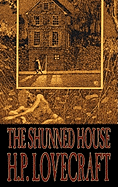
And now, for a guest appearance by H.P. Lovecraft as editing victim of the day:


Photo: Alibris.com
“To declare that we were not nervous on that rainy night of watching would be an exaggeration both gross and ridiculous. We were not, as I have said, in any sense childishly superstitious, but scientific study and reflection had taught us that the known universe of three dimensions embraces the merest fraction of the whole cosmos of substance and energy. In this case an overwhelming preponderance of evidence from numerous authentic sources pointed to the tenacious existence of certain forces of great power and, so far as the human point of view is concerned, exceptional malignancy. To say that we actually believed in vampires or werewolves would be a carelessly inclusive statement. Rather must it be said that we were not prepared to deny the possibility of certain unfamiliar and unclassified modifications of vital force and attenuated matter; existing very infrequently in three-dimensional space because of its more intimate connection with other spatial units, yet close enough to the boundary of our own to furnish us occasional manifestations which we, for lack of a proper vantage-point, may never hope to understand.” (-- The Shunned House)


I know, it’s Lovecraft. Grammatically it’s textbook correct, but let’s rewrite it anyway.

We were scared, I won’t deny it. Neither of us was superstitious, but with science discovering the God Particle this year, who knew? The stories, what we had seen, everything we knew, pointed to something both strange and evil. We didn’t think it was a werewolf or a vampire. We weren’t idiots. But there was something there, something that – just maybe – no one had ever seen before. Something we couldn’t understand from somewhere we couldn’t go.


The good editors among you noted the passage is still in a passive voice, but there’s only so much you can do with Lovecraft. The experiment was to keep as much of the original passage’s meaning - and atmosphere - as we could with as few words as possible.

Now go write something and have fun while you do. Then edit the heck out of it.

Michael Lane

http://realmichaellane.blogspot.ca/

@Michael_M_Lane on Twitter